Common symptoms of seasonal allergies include:
- Itching in the nose and eyes
- Sneezing
- Stuffy nose (congestion)
- Runny nose
- Mucus (phlegm) in the throat (postnasal drip)
Do You Live in an Allergy Capital™?
Your location can have an impact on your seasonal allergies. Our 2025 Allergy Capitals™ report looks at the top 100 most challenging cities in the continental United States to live with seasonal pollen allergies.
The Asthma and Allergy Foundation of America (AAFA) has produced this report to:
- Help people recognize, prevent, and manage allergy symptoms
- Help communities identify where the needs of people with allergic diseases can be better met
- Raise awareness about the impact of seasonal allergies and provide helpful information to improve the quality of life for people who experience them
Relief from seasonal allergies is possible with the right treatment no matter where you live.

Weed Pollen
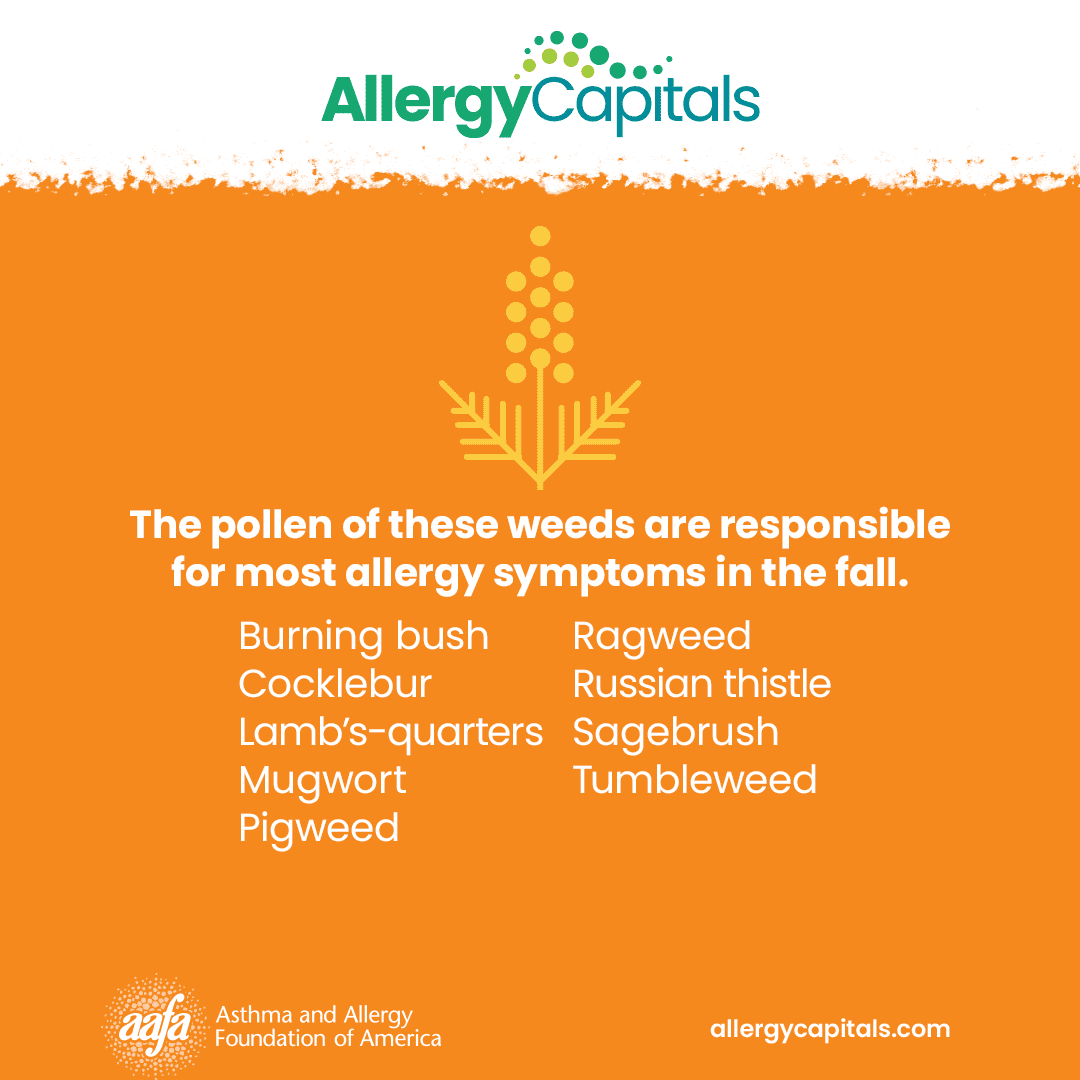
Weed pollen is one of the main causes of allergy symptoms – especially ragweed pollen. Ragweed pollen allergy affects about 50 million people in the United States.
Ragweed is hard to escape from in the United States. It grows in 49 states. There are several types. And ragweed’s pollen is so light, it can travel for hundreds of miles in the air.
Ragweed season starts around August, depending on what state you live in. Then it peaks in mid-September and lasts through October.
But ragweed isn’t the only type of plant that can cause fall allergy symptoms. Other types of weeds that can cause symptoms include:
- Burning bush
- Cocklebur
- Lamb’s-quarters
- Mugwort
- Pigweed
- Russian thistle
- Sagebrush
- Tumbleweed
Tips for Dealing with a Weed Pollen Allergy
1. Track the pollen count for your area. The news media often reports the count for your area, especially when pollen is high. You can also get your area’s pollen counts from the National Allergy Bureau or apps like Pollen Wise.
2. Stay indoors with windows closed when the pollen counts are high, if possible. Get a Certified Asthma & Allergy Friendly® air filter for your air conditioner.
3. Prevent pollen from being tracked into your home. If you spend a lot of time outside during peak pollen time:
- Take your shoes off before entering your home
- Don’t wear your “outside” clothes to bed
- Cover your hair when outside or wash it at night
- Wipe off pets before they enter your home
- Shower when you get home after being outside for a long period of time.
4. Take allergy medicines and start treatment before the ragweed pollen season begins in your area. See a board-certified allergist to help determine if you should be tested for weed or other pollen allergy. They can help you develop a care plan. Find out what time of year ragweed pollen starts to appear in your area so you can start allergy treatment at least 2 weeks before pollen season begins. Many over-the-counter medicines work well to control pollen allergy symptoms. They can also help alleviate symptoms related to the eyes, nose, and airways.
5. Talk with an allergist about immunotherapy. There are 2 types of immunotherapy: allergy shots and sublingual immunotherapy (SLIT). This type of treatment may provide long-term relief. If you have allergic asthma, your Asthma Action Plan may include some of these allergy treatments to help you keep your asthma under control. These therapies are prescribed and monitored by a board-certified allergist.
Nasal Spray Tip
A nasal spray is one type of treatment recommended to treat pollen allergies. Many are available over the counter. To make sure your nasal steroid spray is effective in treating nasal allergy symptoms, follow these steps:
- Gently blow your nose before using the spray.
- Don’t tip your head backwards.
- Place the tip at the entrance of your nostril and aim it toward the ear on the same side.
- Use your finger to hold the other nostril closed.
Mold
Mold counts tend to be higher in the fall, but mold can be present year-round, other than when the ground is frozen. Mold thrives in conditions that are cool and damp, hot and dry, and windy. Fall landscapes can encourage mold growth. As leaves fall and wood decays, mold thrives. Dry, breezy fall weather can spread mold spores in the air. But fall can also be warm and humid in some places. That encourages mold growth too.
You can also find mold inside your home. It is often found in bathrooms, kitchens, and basements. It can appear any time of year, especially if you have a water leak or live in a humid climate.
Mold allergy symptoms are the same as typical seasonal allergy symptoms. But an allergy to a type of mold called Aspergillus can cause allergic bronchopulmonary aspergillosis. It is severe and can be hard to treat. Symptoms may include severe wheezing, coughing, and shortness of breath, much like asthma.
Tips for Dealing with a Mold Allergy
- Clean up fall leaves and yard debris as soon as possible to avoid giving mold a place to thrive. Wear sunglasses, a hat, and an N95 or other protective mask when cleaning up moldy areas, working with mulch, or cleaning up rotting logs and wood. Or have someone without a mold allergy do it, if possible.
- Fix and remove sources of mold in your home. Repair water leaks right away. Use exhaust fans in your kitchen and bathroom. Don’t leave wet towels and clothing sitting around.
- Use a dehumidifier to remove moisture in your home. Keep humidity between 30 and 50%.
Understanding the Difference Between Respiratory Infections and Seasonal Allergy Symptoms
Some symptoms of respiratory illnesses can be similar to seasonal allergy symptoms. AAFA has created this chart to help you understand the different symptoms of COVID-19, the flu, RSV, the common cold, asthma, and allergies. If you have a fever and experience any of these symptoms, consult your doctor.
Warmer Weather and Longer, Stronger Growing Seasons
If you think fall is starting to feel more like summer, you’re right. Climate change is responsible for a longer, warmer growing fall season, giving plants more time to grow and produce more pollen.